Category Archives: Thoughts

Anima and the Animus: Carl Jung (1875-1961)

The Swiss psychologist and psychiatrist, postulated that the unconscious of the male contains a female, archetypal (or typical, instinctive) figure called the “Anima”; the correlative male form in the unconscious of the female Jung called the “Animus.” I infer that the entity or whole self of each of us, regardless of our current , individual sexual orientation, contains its own counterbalancing male or female quality, whichever the case maybe. I suspect that an energy gestalt like the entity is much more aware than we can be of its “hidden” opposite-sex form or forms; for there may be many of them.

a64ujau

Ideas about the Anima and the Animus and other-sex qualities or personification within each of us actually represent memories of past lives. (Jung himself thought the questions of reincarnation, and of karma [or, roughly, destiny of fate], to be “obscure”–he couldn’t be sure of the existence of such phenomena.) The Anima and the Animus are highly charged psychically, and also appear in the dream state. They operate as compensations and reminders to prevent us from over-identifying oneself with our present physical body. The reality of the Anima and Animus is far deeper than Jung supposed. Symbolically speaking, the two together represent the whole self with its diverse abilities, desires, and characteristics. Personality as we know it cannot be understood unless the true meaning of the Anima and the Animus is taken into consideration.

aat

The libido is regarded as the sexual urge or instinct-positive, loving, psychic energy that shows itself in changing ways as the individual matures.

ENTITIES ARE ETERNAL, Personalities are not static things.

They are not as nicely nor as neatly packaged out, one to a body, as our psychologists believe. They constantly change. They grow. They make decisions. They use the physical body fully, or they partially depart according to their own inner needs and development.

de53

When psychic gestalts are formed they are not static. They make different alliances until they find their place in a whole identity that severs their purposes, or are song enough to become indestructible. They are always becoming. they are not closed units.

When man realizes that he creates his own image now, he will not find it so startling to believe that he creates other images in other times.

Only after such a basis [is established] will the idea of reincarnation achieve its natural validity, and only when it is understood that the subconscious, certain layers of it, is a link between the present personality and past ones, will the theory of reincarnation be accepted as fact.

Man sees not not even half of the whole entity which is himself/herself.

Scientists have glimpsed the complications of the human body. They have scarcely glimpsed the complicated realities of the mind.

Altered states of Awareness

There are four recognized [electrical] brain waves, and in speed they range upward from 0 to 26 and more Hertz units, or cycles per second. These rhythms can vary somewhat, and are best thought of as areas of activity. Brain waves overlap. Very simply, delta brain waves are connected with dreamless sleep, theta with creativity and dreams, alpha with a relaxed alertness and changing consciousness; beta–the fastest–with concentration, and with an intense focus upon all of the challenges [and anxieties and stresses, many would say] faced in the ordinary daily world.

hgnd

Even if beta waves, then, seem to be the “official pulses” of our civilization, when aren’t we actually in a state of altered consciousness? For no matter which brain rhythm may predominate at any time, that state is certainly an altered one in relation to the other three. But more than this, why not call all actions of the brain “altered” when compared to the concept of the individual personality’s whole self or entity?

hgd

Highly creative people usually generate large amounts of theta and low-alpha waves pretty constantly while doing their thing. Measuring and recording brain waves is a complicated task, however; not only is it important which areas or lobes of the brain are monitored–if not all of them–but because of the mechanical limitations of the EEG itself much that goes on in the brain is necessarily missed. In addition, the two hemispheres of the individual brain often show variations in electrical energy states. But most importantly, I think, while the EEG can indicate broad categories of brain activity, it can hardly probe the participant’s very individual and subjective content of mind within this camouflage [physical] reality. The state of “EEG art” isn’t that advanced yet [if it ever will be].

Human personality has no limitations except those which it accepts.

There are no limits to its development or growth, if it will accept no limits. There are no boundaries to the self except those boundaries which the self arbitrarily creates and perpetuates. There is no veil through which human perception cannot see, except the veil of ignorance which is pulled down by the materialistic ego.

ukrur

That which appears empty, such as our space, is empty only for those who do not perceive, who are blind because they fear to perceive that which the ego cannot understand. The ego, however, is also capable of greater knowledge and potentiality and scope. It dwells in the physical universe, but it can indeed also is part of the personality and as such it can partake of sturdier, heartier, more vivid realities. The personality can dwell and does dwell in many worlds at once.

ukd6uk

The inquiring intuitions and the searching self, like summer winds, can travel in small and large spaces, can know of actualities that are more minute than pinheads and more massive than galaxies. The power and ability of the human personality, in a most practical manner, can be seen as unlimited.

Reality seems to have its being in some medium other than flesh and bone.

As a species we are composed of organic tissue, but none of us would deny the reality of our thoughts, for example, yet a thought is not a physical object like a glass that we can hold in our hands. When we try to examine a thought, we instantly change it. The original thought vanishes, to be replaced by a new one. We can only know what a thought is through our own inner experience.

ee3e3rf

Neither would we deny the validity of psychological insights or emotions or dreams. These are in no way concrete objects, yet they form an important part of our own consciousness. Such subjective experiences seem to be connected with physical matter, but they do not seem to be literally contained within it.tnsb

We say dreams exist “in our heads.” but certainly dreams are not in our heads in the same manner that physical tissue and blood vessels and bones are in our heads. A surgeon can probe into the brain tissue with a scalpel, but no physical examination or operation will disclose s dream or a thought or a psychological experience. No scalpel can cut into a dream as it can pierce the visible fibers inside our bony skulls. Then what do we actually mean when we assume that dreams and thoughts are inside our heads?

pyhlyt8o

The idea is based on the assumption that the human personality is limited by physical matter and held in bounds by the physical self. Therefore, anything belonging to the personality would have to exist within the physical organism. If we are purely physical creatures, then, we would still have to admit that we contained some things that were not physical; otherwise these thoughts and dreams inside of us would have to be physical also, and they are not.

r,md

Scientists have theorized that consciousness may be the result of the ways in which the body operates. Even if this were the whole story, and I do not believe it is, then we would still have to admit that part of our reality was not physical, but was born out of physical matter and could not be seen and touched. Nevertheless, because of this attitude we have the idea that reality is determined by physical existence only. (We consider valid only those things which can be judged so by the physical senses.)

ouut

It seems to make no difference that physicists have discovered that the senses themselves distort reality, and that we merely create patterns out of atoms and molecules, perceive these as objects and give them names. In general we still act as of physical reality were the only standard by which to measure experience.

ou6y

We can hardly refer to something which affects us deeply as unreal. We can say that an experience exists in some perspectives and not in others. Many dreams are as vivid as any waking experience, for example, and have as great an effect upon our personalities. The dream may not have a physical reality but it certainly has a psychological reality.


Perceptions of consciousness are not limited.

For example, that the consciousness of the tree is not as specifically focused as our own. To all intents and purposes, however, the tree is conscious of 50 years before and 50 years hence.

egy54

In sense of identity spontaneously goes beyond the change of its own form. It has no ego to cut the “I” identification short. Creatures without the compartment of the ego can easily follow their own identities beyond any changes of form. The inner self is aware of this integrity of identity, but the ego focused so securely in physical reality cannot afford this luxury.

The True Mental Physicist.

Such scientist in our future will be able to allow his/her consciousness to flow into the many open doors (of inner realities) that can be found with no instrument, but with the mind. To throw ones’ consciousness into small physical instruments (computer components, for instance), and perceive their inner activity at the level of, say, electrons. Tuned into his/her own “side-pools of consciousness,” his/her own “probable neurological materialization.”

The sort of “time” available to molecular consciousness

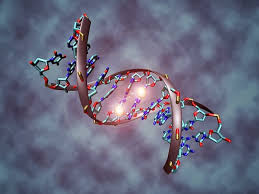
Biological precognition is firmly based in the chromosomes and genes, and reflected in the cells. The cell’s practically felt ‘Now” includes, then, what we think of as past and future, as simple conditions of Nowness. They maintain the body’s structure in our poised time only by manipulating themselves in a rich medium of probabilities. There is a constant give-and-take of communication between the cell as we know it in present time, and the cell as it ‘was’ in the past, or ‘will be.’

The physical world that recognizes invisible patterns

These patterns are ‘plastic,’ in that while they exist, their final form is a matter of probabilities directed by consciousness. Our senses perceive these patterns in their own way. The patterns themselves can be ‘activated’ in innumerable fashions. There is something out there to observe.

yhashas

Our sense apparatus determines what form that something will take, however. The mass world rises up before our eyes, but our eyes are part of that mass world. We cannot see our thoughts, so we do not realize that they have shape and form, even as, say clouds do. There are currents of thought as there are currents of air, and the mental patterns of man/woman’s feelings and thoughts rise up like flames from a fire, or steam from hot water, to fall like ashes or like rain.

iyih

These patterns of probabilities themselves are not inactive. They are possessed by the desire to be-actualized. Behind all realities there are mental states. These always seek form, though again there are other forms than those we recognize.