Category Archives: Emotions

Love and Light are Knowledge

Many of us have adopted destructive sets of beliefs, lives filled with ego-gratification, greed and selfishness. This however is not the soul’s true nature. If left alone without all of the negative stimuli, the soul would return to a peaceful hum that it has always known. Mankind and womankind would be in sync with Mother Earth and the rest of the planetary life that dwells in our dimension. If we would learn to surround ourselves with The Creator’s light and energy, we would essentially be able to eradicate the constant barrage of fears that have surrounded us. Love and light, which is knowledge, are the only things that are needed to free us from our path of self-destruction. They will dissolve the layers of negativity like acid on ripe fruit and release our soul’s essence from its spiritual slumber. The soul’s essence of each and every one us is trying to pry itself free from the grip of the negative energies surrounding our existence.

As we perceive our reality as something that We have created, then we can and will change it for the better. To find oneself, one must look within, for within lies the perfection of God and the Universe that it ultimately – US. Eventually all of us will see the light, if not now then later. For the entities that refuse to evolve and continue on their greedy, self-centered path with no regard for their fellow man, we may find oneself removed from the humming rhythms of the evolving Earth’s move into the peaceful fourth dimension and assigned to one of the lower-vibrational, two-dimensional planets until such time as our soul yearns to move towards the light and be cleansed. Like a stone encased inside a mountain, there we will sit and wait until we have had enough time to seek the love light.

Many of us have already been awakened from our spiritual slumber and are diligently participating in moving the rest of mankind and womankind into the arenas of awareness. Now when I am referring to negative influences or energies, I would clarify here what I am attempting to convey. It is with respect to our ability to allow our ego’s desires to control our vehicle instead of our soul’s light, as the soul only knows its light and love. It also refers to certain energies in and around our planet that do not serve to evolve with the plan of The Creator.

Now I am not trying to be gloom and doom here, for those entities that are relinquished to this dimension do not in any way reflect the majority of us. Most of us will start soon to get the messages and move towards the light. However, for those of us who persist in the cat-and-mouse game of dominating everyone and everything on the planet, our evolution will not be forthcoming as swiftly as the rest of our planet’s citizens and we may be left behind. I have spoken before about how we can change our reality with our thoughts. Since our reality IS our thoughts, this will not be hard to do.

Cave, camp, and open fires

An open fire elicits certain responses from the cells that for instance, a furnace does not. The effect of the light plus the warmth on the skin is extremely healing. People sit by a fireplace in wintertime because it is unconsciously recognized that recuperative and therapeutic results occur. Simply put, the cells respond to fire-light in somewhat the same manner that flowers do to sunlight. The stimulation is much more than skin deep, however, and an open fire is cleansing. It even helps clear the blood.

Cavemen recognized this. I am not suggesting that we use our fireplaces instead of the furnace. I am saying that in wintertime there are definite health-value effects to be felt when we sit in front of an open fire. Two evenings a week would be quite effective.

The proximity of so many trees also has considerable health value, and to those doing psychic or other creative work the effects are particularly conducive to a peaceful state of mind. Trees are great users and yet conservators of energy, and they automatically provide much vitality to areas in which they are plentiful. This is physically obvious in scientific terms. Besides that, however, the consciousnesses of trees are remarkably kind and enduring.

We think of dogs as friends of man, and we personify gods in human terms. We think of them sometimes as guardians. In those terms, now, trees are also guardians. They are attached to the people they know. You cannot put a leash on them and walk them around the block, yet trees form a protective barrier about, say, a home or a neighborhood. They are actively concerned. They have personalities–certainly to the same extent that dogs do, yet of an entirely different nature. They respond to us. The trees in a neighborhood are particularly friendly, strong, and protective, and they will help renew our energies.

The air may be drier in a certain way. Ocean air is wet but it is healthy. River air is wet, but it may be healthy or unhealthy, according to the nature of the river, the land, and the attitude of the people. After a flood, the river air is felt to be a threat, and to many it is therefore unhealthy. Why do some people, after being flooded in one location, then move to another equally threatening environment.

The VOID Family

They have excellent precognitive abilities, which of course means that at least unconsciously they understand the motion of probabilities. They can work in any field. In our terms it is as if they perceive the future motion or direction of an idea, a concept, or a structure. They then work with all of their minds to bring the probability into physical reality.

In conventional terms they may appear to be great activists and revolutionaries, or they may seem to be impractical dreamers. They will be possessed by an idea of change and alteration, and will feel, at least, driven or compelled to make the idea a reality. They perform a very creative service as a rule, for social and political organizations can often become stagnant, and no longer serve the purposes of the large masses of people involved. Members of this (Void) family may also initiate religious revolutions, of course. As a rule, however, they have one purpose in mind: to change the status quo in whatever the area of primary interest.

It is already easy to see how the purpose of various families can inter-mesh, complement each other, and also conflict. Yet all in all, almost, they operate as systems of creative checks and balances.

Life is far from Inflexible

Returning to alternate compositions, we can at any time bring into our own life-composition elements from and “alternate” ones.
Some people structure their lives around their children, others around a career, or pleasure, or even pain. These are simply certain focuses that we choose, that direct our experience. We can add other focuses while still retaining our own identity–indeed, enriching it.

Sometimes we act as though one ability contradicts another. We think “I cannot be a good parent and a sexual partner to my mate at the same time.” To those who feel this way a definite contradiction seems implied. A woman might feel that the qualities of a mother almost stand in opposition to those of an exuberant sex mate at the same time.” To those who feel this way a definite contradictions seems implied. A woman might feel that the qualities of a mother almost stand in opposition to those of an exuberant sex mate. A man might imagine that fatherhood meant providing an excellent home and income. He might think that “aggressiveness,” competition, and emotional aloofness were required to perform that role. These would be considered in opposition to the qualities of love, understanding, and emotional support “required” of a husband. In actuality, of course, no such contradiction apply. In the same way, however, we often seem to feel that our identity is dependent upon a certain highly specific role, until other qualities quite out own seem threatening. They almost seem to be un-selflike.

To some degree we feel the same way when we encounter the concept of probable selves, or of counterparts. It is as though we had an unlimited bank of abilities and characteristics from which to draw, and yet were afraid of doing so–fearing that any addiction could make us less instead of more. If all of this goes on personally as we choose one melody and call it oneself, then perhaps we can begin to see the mass creative aspects in terms of civilizations that seem to rise and fall.

Healers

This does not mean that these people may not be creative, or organizers, or teachers, such as those who have completed advanced yoga teacher training courses and learned about the benefits of yoga and its potential healing powers. But, it potentially means that the primary slant of their consciousness will be directed to healing. We might find them as doctors and nurses, while not usually as hospital administrators. However, they may be psychics, social workers, psychologists, artists, or in the religions. They may work at flowers shops. They may work on assembly lines, for that matter, but if so they will be healers by intent or temperament. If you’re looking into metaphysical healing powers for weight loss you could possibly check that site out for acupressure healing properties. I wish you well on getting to the weight you wish to!

I mention various professions or occupations to give clear examples, but a mechanic may belong to this Tumold group, or to any group. In this case the mechanic would have a healing effect on the customers, and he would fixing more than cars.

The healers might also appear as politicians, however, psychically healing the wounds of the nation. An artist of any kind, whose work is primarily meant to help, also belongs in this category. We will find some heads of state, and –particular in the past–some members of royal families who also belong to this group.

Transmitted Thought

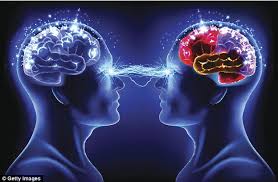
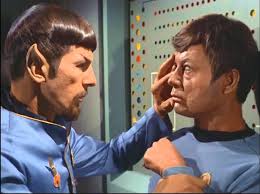
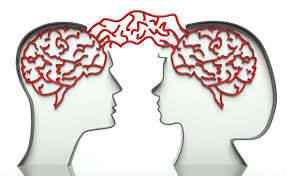
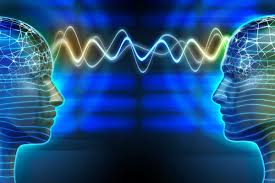
There are no duplicates. Yet, we may say, are not some thoughts duplicates?  The variations may indeed be slight, but variations are always present. A thought transmitted knowingly or unknowingly by A. is not precisely the same thought when it reaches receiver B.

The thought originally held by A. is still retained by A., yet a seemingly identical thought reaches B. A. has lost nothing. That is, in trying to send the thought, in trying to duplicate the thought, A. still retains it. So what is passed on to receiver B.? This is rather important, since an explanation will do much to account for the frequent difference that occurs in telepathic communications.

Whether or not- A. the sender, knowingly transmits this apparent duplicate, at the point of its transmission, the sender forms an electrical impulse pattern that is supposed to duplicate the original thought. But no such identical duplication is possible, as far as I know, within reality of any kind.

A side note: identical twins are hardly identical, for example.

As soon as the attempt is made to duplicate the thought, we find the attempt itself strains and pulls; the impulse changes minutely, or to a greater degree. The point I want to make is that any attempt at duplication actually forces the thought it is already a new thought, bearing great resemblance to the original. But it is not the original thought.

Prime identities cannot be duplicated. Exact duplication is always an effect of insufficient knowledge. In some cases two thoughts may appear identical, but whether or not examination can show it, such exact duplication is impossible. Now when receiver B. receives a transmitted thought, he may react and interpret that part of the thought that is similar to the original.

He or she may , on the other hand, react to and interpret that portion of the thought that is not similar. He or she may react to and interpret the similarity of the difference. His or her reactions depend upon several circumstances, including the intensity of the electrical pulsations that compose the thought, and his or her own inner facility in reaching to particular ranges of intensities.

Habitually, individuals establish overall frequencies that they are able to handle, for various reasons. An individual will therefore feel more at home operating within certain frequencies. The original thought is used as a pattern for the creation of a new electrical reality which may or may not be directed at any given receiver. It is obvious that the attempt to duplicate is present: were it not for this attempt to duplicate, then there would be little similarity between any separate identities.

The nature of the thought that is received by B. is determined by many factors. We shall consider but a few of these. These include the original intensity of the thought as A. ; the familiarity or unfamiliarity of the range of frequencies that compose the thought to any intended receiver.

The receiver will understand and interpret in general the intensity range he is in the habit of using himself. Some, or a portion of the transmitted thought, may fall within his range and some may not. He or she may pick up the portions of the thought which are similar to the original thought which are similar to the original thought, in which case some scientific proof of sorts can be achieved. It can happen, however, that the dissimilarity is what falls within his or her particular accustomed range, in which case proof will be inadequate.

Emotions also possess an electrical reality. Thoughts formed and sent out within the impulse range of emotion often succeed because of the peculiar nature of the emotional electrical impulses themselves. They have a particularly strong electrical mass. They also usually fall within powerful intensities, for reasons. Thoughts formed under a strong emotional impetus will carry greater vividness, have a greater tendency toward duplication, and are apt to be interpreted with some success.

Also, all individuals have had familiarity with emotions as they exist within electrical intensities, and are accustomed to reacting to them. The whole process in instantaneous. However, the thought which is now an approximation of the original thought is changed once more by the receiver himself or herself. He or she does not actually interpret the thought itself. He or she interpret the thought itself. He or she interprets its meaning and forms a new thought identity.

Action, the very action of transmission, alters the nature and electrical reality of the thought itself.

Our imaginary sender A. does not transmit a given thought. He or she does not even send an exact duplicate. Nor does the receiver receive the thought in the same condition. The original thought is retained by A. A. forms a thought as nearly identical as possibilities allow it to be. This he or she transmits to B. But B. can’t receive the thought in its present condition, for the action of receiving a thought also changes it. He or she forms a thought as nearly identical as possible for him and interprets it.

Action can never be considered apart from that which is seemingly acted upon, for action becomes part of structure. Action begins from within and is a result of inner vitality inherent in all realities. Action is not alone. It is not an identity. ACTION IS A DIMENSION OF EXISTENCE.

A Group Selves Form The Soul

I am not telling you that each if us do not have a soul to call our own. We are a part of our soul. It belongs to you, and you to it.

Memories exist as patterns. In this life, each of us come together and part, come together and part again, forming a counterpart relationship when it suits our purposes, as streams of consciousness mix and merge, and then separate.

These counterparts are psychic, relationships, formations that in the deepest terms flow into historic time and out of it. Some, in our terms, last a lifetime. Others represent psychic encounters that happens between two individuals at several points, say, but are not continuous. They may be no less intense, however.

Playful Intellect

In their own ways children are quite aware of their counterparts, and of, other portions of their individual realities. They relate to their counterparts in dreams. They sometimes see them as “invisible” companions. We dream of our own counterparts frequently, but we are so afraid of maintaining what we think of as the rational adult self that we ignore such communications.

In certain circles, soul mates is the latest vogue. The idea is an old one; it is based upon the reality of counterparts, and presents another version of the theory. But, it is treated with an almost pompous seriousness. Many of those who use the term do it to hide rather than to release their own joyful abilities. They spend time searching for their soul mates–but the search involves them in a pilgrimage for a kind of impossible communication with another, in which all division is lost, with the two then trying to join in a cementing oneness, suffocating all sense of play or creativity. We are not one part, or one half, of another soul, searching through the annals of time for our partner, undone until we are complete by our soul mate.

When we become too intent to maintain our reality we lose it, for we deny the creativity upon which it rests.

I am not denying the importance of true reason. Certainly I am not telling us to ignore the intellect. But we do often ignore the playfulness of the intellect, and force it to become something less than it is.

Most People Suspect Creativity

They expect that its products will be unreal or not valid in the physical world. Yet there is a great correlation between what we think of as creativity, altered states of consciousness, play, and “spiritual” development.


When we create a poem or a song or a painting we are in a state of play, of enjoyment, of freedom. We intend to make something different, to produce a new version of reality. We create out of love, for the sake of the experience. At one time or another almost everyone has that kind of experience, but children have it often. They compose songs and music and paintings in their heads. They alter the focus of their consciousness frequently. They do not stop to ask whether or not the play is real or pertinent. Physically, play develops their body mechanisms. It also flexes the great capabilities of their minds.


When we think: “Life is earnest,” and decide to put away childish things, then often we lose sight of our own creativity and become a goal that must be attained. The goal is to be achieved through hard work, and as long as we believe this we do not understand what the spirit is.


A natural analogy–plants do not work at developing their potential. They are not beautiful because they believe it is their responsibility to please our eye. They are beautiful because they love themselves and beauty. When we are so serious we almost always distort the nature of our own spirit as far as our understanding of it is concerned. We cannot let our guard down long enough to discover what it is. We keep looking for new rules or regulations, or methods of discipline.

We Are Time Contemporaries

Neutral data are not transferred through “living” vehicles. Whether physically materialized or not, knowledge is possessed by consciousness. It is always “individualized”, though not necessarily in our terms.

The information carried by the chromosomes is not general, but highly specific. It is codified data (itself alive) that contains within it the essence of ancestral experience–of specific ancestral experience. Biologically we do indeed carry within us, then, the memories of our particular ancestors. These form a partial basis for our subjective and physical existence, and provide the needed support for it.

Since one portion of our heritage is physical, in those terms, those memories can be translated again, back into emotional and psychological events, though usually they are not in our societies.

To that extent the so-called past experience of our ancestors and of our species is concurrent with our own, biologically speaking. That is but one line, however, covered by the chromosomes. We have “another line” of existence that also serves as a support for the one that we presently recognize. It includes other interweaving physical relationships that bind us with all others upon our planet at the same adjacent level of time.  That is, to some extent or another we are related to all of those alive upon the planet. We are time contemporaries. We will have a far closer relationship with some than with others. Some will be our counterparts.

These may or may not be closer to us than family relationships, but psychically speaking they will share a certain kind of history with us. We will also be connected through the physical framework of the earth in the large give-and-take of its space-time scheme.

The Physical Journey

Walking down the street, we expect the trees to stay in their places, and not transform themselves into buildings. All of these assumptions are taken for granted in our physical journeys. We may find different customs and languages, yet even these will be accepted in the vast, overall, basic assumptions within whose boundaries physical life occurs. We are most certainly traveling through the private and mass psyche when we so much as walk down the street. The physical world seems objective and outside of oneself, however. The idea of such outsideness is one of the assumptions upon which we build that existence. Interior traveling is no more subjective, than a journey from New York to San Francisco. We are used to projecting all destinations outside of oneself. The idea of varied inward destinations, involving motion through time and space, therefore appears strange.


Generally speaking, we have explored the physical planet enough so that we have a good idea of what to expect as we travel from country to country.


Before a trip, we can produce travel maps that outline the attractions and characteristics of a certain locale. The mode of transport has taken different folds. We used to travel by flight in economy or even rent private jet. Now, we see travelers in motor bikes and also on foot! However, much of what we explore are part of what is already discovered. We are not traveling blind folded, therefore, and while any given journey may be new to us, we are not really a pioneer: The land has been mapped and there are few basic surprises.

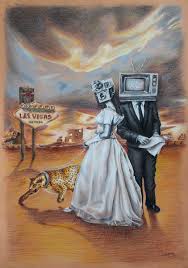
The inner lands have not been as well explored. To say the least, they lie in virgin territory as far as our conscious mind is concerned. Others have journeyed to some of these interior locales, but since they were indeed explorers they had to learn as they went along. Some, returning, provided guidebooks or travel folders, telling us what could be expected. We make our own reality. If we were from a foreign land and asked one person to give us a description for reality. The person might say “Las Vegas is a frightful place in which crime is rampant, gangs roam the streets, murders and rapes are the norm, and people are not only impolite but ready to attack us at a moment’s notice. There are no trees. The air is polluted, and we can expect only violence. ” If we asked someone else, this individual might say instead: “Las Vegas has the finest of casinos despite their decline since the rise of online casinos like paybyphonebillcasino.uk. Additionally, Las Vegas has open-air concerts in some of the parks, fine sculpture, theater, and probably the greatest collection of music outside the Nashville. It has a good overall climate, a great mixture of cultures. In it, millions of people go their way daily in freedom. ” Both people would be speaking of their private beliefs, and would be colored by the individual focus from which each of them viewed that City.


One person might be able to give us the city’s precise location in terms of latitude and longitude. The other might have no such knowledge, and say instead: “I take a plane at such-and-such a place, at such-and-such a time, giving Las Vegas as my destination, and if I take the proper plane I always arrive there.


Explorers traveling into inner reality, do not have the same kind of landmarks to begin with. Many have been so excited with their discoveries that they wrote guidebooks long before they even began to explore the inner landscape They did not understand that they found what they wanted to find, or that the seemingly objective phenomena originated in the reflections of the psyche.

We may, for example, have read books numbering the “inner realms,” and telling us what we can expect to encounter in each. Many of these speak of lords or gods of the realm, or of demons. In a strange way these books do provide a service, for at certain levels we will find our own ideas materialized: and if we believe in demons then in those terms we will encounter them. The authors, however, suppose that the devils have a reality outside of our belief in them, and such is not the case. The demons simply represent a state of our own mind that is seemingly out there, objectified. Therefore, whatever methods the authors used to triumph over these demons is often given as proof not only of the demons’ reality but of each method’s effectiveness.


Now if we read such books we may often program our activity along those lines, in the same way that a visitor to Las Vegas might program experience of the city in terms of what he of she had been told existed there.


That kind of structuring also does a disservice, however, for it prevents us from coming in contact with our own original concepts. There is no reason, for example, to encounter any demons or devils in any trance or out-of-body condition. In such cases our own hallucinations blind us to the environment within which they are projected. All of its dimensions are faithfully and instantly produced as experience when we learn to take our “normally alert” conscious mind with us; and when we are free of such limiting ideas, then at those levels we can glimpse the inner powers of our own psyche, and watch the interplay of beliefs and symbols as they are manifested before our eyes. Until we learn to do this we will most certainly have difficulty, for we will not be able to tell the difference between our projections and what is happening in the inner environment.


Any exploration of inner reality must necessarily involve a journey through the psyche, and these effects can be thought of as atmospheric conditions, natural, at a certain stage, through which we pass as we continue.


Our world, is the result of a certain focus of consciousness, without which that world cannot be perceived. The range of consciousness involved is obviously physically oriented, yet within it there are great varieties of consciousness, each experiencing that seemingly objective world from a private perspective. The physical environment is real in different terms to an animal, a fish, a man, or a rock, for example, and different portions of those forms. This is highly important.


If an inhabitant from another reality outside of our own physical system entirely were to visit it, and if “his” or “her” intelligence was roughly of the same degree as our own, he or she would still have to learn to focus his or her consciousness into the same way that we do, more or less, in order to perceive our world. He or she would have to alter his or her native focus and turn it in a direction that was foreign to him or her. In this way he or she could “pick up our station.” There would be distortions, because even though he or she managed such manipulations he or she might not have the same kind of native physical structure as our own, or course, through which to receive and interpret those data his altered consciousness perceived.


Our visitor would then be forced to translate that information as best he or she could through his or her own native structure, if it were to make any sense to his or her consciousness in its usual orientation. All realities are the result of certain unique focuses taken by consciousness. In those terms, there is no outside. The effect of objectivity are caused as the psyche projects its experience into inner dimensions that it has itself created.
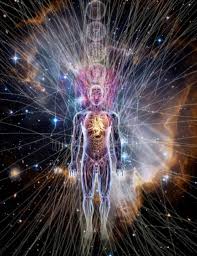

Within, those frameworks are ever expanding, so that in our terms at least it seems that greater and greater distances are involved. Travel to any other land of physical reality must then involve alterations of consciousness.


While all of our thoughts and feelings are “somewhat” materialized, only some of them become physical in our terms. They are then accepted as physical reality. They provide the basis for the physical events, objects, and phenomena upon which we all agree. Therefore our world has a stability that works well enough for daily concerns. At that point we are tuned in precisely on our “home station.” We ignore the ghost symbols or voices, the probable actions that also occur, but that are muffled in the clear tones of our accepted reality. When we begin to travel away from that home station, we become more aware of the other frequencies that are buried within it. We move through other frequencies, but to do this we must alter our own consciousness. The probable realities connected with our own system are like the suburbs, say, surrounding a main city. If for simplicity’s sake we think of other realities as different cities, then after we leave our own we would pass through the suburbs, then into the country, then after a time into other suburbs until we reached another metro-city. Each metropolis would represent a conglomeration of consciousnesses operating within an overall general frequency of clearest focus, a high point of psychic communication and exquisite focus in the given kind of reality unless we are tuned into those particular frequencies, however, we could not pick up that reality. We might instead perceive the equivalent of jumbled sound or meaningless static, or jigsaw images. We might simply realize that some kind of activity was there, but without being able to pinpoint it.